In Florida, upgrading your outdoor space isn’t some HGTV trend. It’s usually a reflection of how people actually live here, outside, around the pool, with friends more often than not. With year-round sunshine, pool weekends, and evenings that stretch long past sunset, many homeowners start asking the same question: Is adding an outdoor kitchen a smart investment, or just an expensive upgrade?
The answer isn’t just about cost. It’s about lifestyle, neighborhood expectations, resale psychology, and long-term durability in Florida’s climate. In cities like Sarasota, Tampa, and Naples, where outdoor living spaces are deeply woven into daily life, the right build can feel less like a luxury and more like a natural extension of the home.
What Does an Outdoor Kitchen Really Cost in Florida?
Before deciding if it’s worth the money, it helps to understand realistic numbers.
Outdoor kitchen pricing in Florida ranges widely depending on scope, materials, and infrastructure. A simple island may start under $15,000, while luxury perimeter builds with full cabinetry and specialty appliances can exceed six figures.
What matters in this conversation is understanding that a thoughtfully planned outdoor kitchen is not just a built-in grill. It’s a climate-ready cooking space engineered for outdoor use, built with weather-resistant materials that can withstand humidity, salt air, and storm exposure.
Florida-specific cost drivers include:
Utility trenching for gas, electric, and water
Proper slab reinforcement
Marine-grade stainless steel
Vent hoods under covered patios
Permit compliance
The real evaluation isn’t “How cheap can I build this?”
It’s “Will this hold up and deliver long-term value?”
Does an Outdoor Kitchen Increase Home Value in Florida?
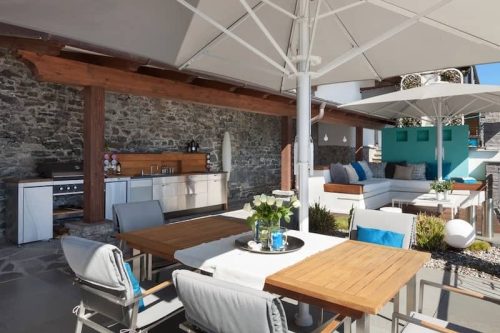
Here’s where Florida behaves differently from most states.
In colder climates, backyard kitchens are seasonal. In Florida, they’re usable year-round. That shifts the value equation dramatically.
Buyer Expectations in Florida
In Naples and Sarasota, buyers often expect a functional outdoor living area alongside the pool. In Tampa suburbs, a finished entertainment setup can become a deciding factor between comparable listings.
When buyers walk into a home and see a cohesive outdoor living environment (grill station, food prep surface, refrigeration, bar seating), they see expanded living space. Not just decoration.
According to the National Association of Realtors, outdoor upgrades consistently rank among the most desirable improvements nationally. In Florida’s climate, the perceived resale value impact can be even stronger when the build aligns with the home’s tier.
Permits Protect Value
Proper permitting also protects appraisal confidence. Gas lines, structural anchoring, and electrical installations must comply with Florida Building Code guidelines.
Unpermitted work can complicate resale. A compliant, professionally installed build enhances buyer trust and helps boost home appeal.
When an Outdoor Kitchen Is Worth It (And When It’s Not)
This is where clarity matters most.
Worth It If:
You host regularly and enjoy entertaining.
Your backyard already includes defined patios or a pool layout.
You plan to stay in your house for at least 5+ years.
Your neighborhood supports upgraded outdoor living spaces.
For many families, it becomes the hub for family gatherings, weekend party nights, and casual weeknight dinners outside. It reduces traffic inside the indoor kitchen and improves flow between zones.
Not Worth It If:
You plan to sell in 12–24 months in a modest neighborhood.
The layout lacks coverage, drainage, or infrastructure.
You overspend beyond neighborhood comps.
You cut corners on materials in Florida’s climate.
An oversized luxury build in the wrong market won’t deliver a strong return. But a right-sized, durable build aligned with location standards often does.
The difference is alignment, not price alone.
Long-Term Value vs Long-Term Costs in Florida
Upfront cost is only half the story.
Long-Term Benefits
Cooking outdoors reduces indoor heat gain during the summer months. That can ease strain on your HVAC system and make daily life more comfortable.
It also transforms unused patio square footage into functional living space for dining, relaxing, and serving drinks. For many homeowners, it enhances daily routines and special occasions.
Long-Term Realities
Florida humidity doesn’t play nice with cheap hardware. Salt air near the coast can quietly eat through lower-grade finishes faster than most homeowners expect. Choosing marine-grade stainless steel, sealed countertops, and quality cabinetry protects the property long term.
Maintenance includes periodic cleaning, sealing stone surfaces, and inspecting hardware after storm season. When built properly, durability offsets ongoing costs.
In short, longevity determines whether the project remains a smart investment or becomes an expensive repair cycle.
Outdoor Kitchen vs Other Backyard Upgrades (Which Delivers More Value?)
A patio upgrade makes things look better. A screen enclosure keeps the bugs out. But neither one actually changes how you use the space day to day. A pool remodel refreshes aesthetics.
It supports cooking, dining, and structured entertaining. It integrates with landscaping and enhances overall style. Unlike purely decorative upgrades, it creates a destination. A place for family and guests to gather.
Because it delivers practical usability, it often provides more consistent daily value than cosmetic-only improvements.
Function typically outperforms decoration when measuring long-term satisfaction.
Florida Permit & Code Requirements Most Homeowners Miss
Many homeowners underestimate compliance requirements.
Gas connections, electrical systems, vent hoods, and structural builds require inspection. Hurricane anchoring and clearance rules vary by county.
Florida’s code exists to ensure projects can withstand extreme weather. Skipping permits may create insurance issues and resale complications.
Working with licensed professionals who understand local compliance ensures your outdoor kitchen renovation meets both safety standards and future resale expectations.
Real Florida Cost vs Value Scenarios
A Tampa homeowner installs a modest island setup designed for casual weekend grilling. It fits the neighborhood and supports occasional hosting.
In Sarasota, a homeowner chooses a mid-tier L-shaped design with sink, refrigeration, and upgraded finishes. In pool-centered communities, that level often aligns with buyer expectations.
In Naples, waterfront markets and luxury perimeter buildings are common. In those neighborhoods, the absence of a finished outdoor living space may actually reduce competitiveness.
The key is matching scope to property value and neighborhood norms, not automatically choosing the most expensive option.
Who This Investment Is Right For
This investment is for you if your home is a long-term sanctuary rather than a short-term stop. If you find yourself gravitating toward the outdoors for morning coffee or sunset dinners, you understand that your living space shouldn’t end at the back door. It is the perfect fit if your home has the architectural bones to support a fluid transition between the kitchen and the patio.
In a market like Florida, choosing this build isn’t just about personal enjoyment. It’s about securing a dominant position in future resale value.
Is It Worth the Money in Florida?
In Florida, where outdoor living is part of daily life, an outdoor kitchen can absolutely make sense when planned strategically.
It’s not about chasing trends. It’s about creating functional, durable space that enhances everyday living and supports resale expectations.
When aligned with neighborhood standards and built with climate-ready materials, it becomes more than a feature. It becomes part of the home’s identity.