The outdoor kitchen cost in Florida can feel all over the place. One homeowner builds a simple setup for under $10K. Another ends up spending five times that, and both thought they were making smart choices. That gap usually comes down to misunderstanding what really drives the price.
It’s not only about appliances or finishes. It’s the stuff behind the scenes. Layout decisions. Utility connections. Even how your outdoor space is shaped before anything gets built.
If you plan to build an outdoor kitchen, this guide breaks it down clearly. What actually increases cost? What doesn’t matter as much as people think. And where you should focus if you want a functional outdoor kitchen that holds up in Florida’s climate.
The Real Cost Range for Outdoor Kitchens in Florida (2026 Snapshot)
Let’s set expectations early. The outdoor kitchen cost in Florida usually falls into three ranges:
Basic setups: $8,000 – $15,000
Mid-range build: $15,000 – $35,000
Custom outdoor kitchen: $35,000 – $60,000+
That range depends heavily on project scope, square footage, and how complex the build gets.
A simple grill island with a standalone grill and small prep space on a concrete patio will stay on the lower end. But once you start adding outdoor appliances like a pizza oven, outdoor refrigerator, or ice maker, plus utility connections, the number climbs fast.
Florida adds one more layer. Local building codes, building permit requirements, and weatherproof materials all play a role. Labor is also higher in high-need areas.
If you want a deeper breakdown of pricing tiers, this complete guide to outdoor kitchen cost in Florida helps frame what’s realistic before you start.
What Actually Drives Outdoor Kitchen Costs Up (The 6 Variables That Define Your Final Invoice)
Most people assume the big spend is on appliances or countertops. That’s only part of it. The real outdoor kitchen cost is determined by what happens before the finishes go in.
In Florida, that gap gets wider. Between stricter inspections, updated codes, and site conditions, small decisions early on can quietly add thousands.
These are the variables that actually move your final number.
1. Structural Work and Site Preparation
This is where most budgets start shifting, before anything even looks like a kitchen.
Florida’s soil isn’t forgiving. Sandy ground can shift, settle, and crack if the base isn’t done right. That’s why many builds require thicker monolithic slabs or deeper footings just to support permanent structures.
We recently saw a project in Tampa where the patio drainage was overlooked. Fixing the slope and strengthening the base added about $2,500 before the first piece of custom stonework was even installed.
This is the part no one sees, but it’s where labor costs and structural elements stack up fast. Skip it, and the entire outdoor kitchen risks shifting over time.
2. Utility Connections (Gas, Electric, Plumbing)
Utilities aren’t just plug-and-play. In Florida, they are one of the most significant cost drivers you’ll face. Running gas lines, extending water pipes, or adding dedicated power for a vent hood requires trenching, professional inspections, and strict adherence to local codes.
There’s also a newer issue showing up on jobs. Inspectors are now stricter about GFCI protection and dedicated circuits.
That means:
A fridge or outdoor refrigerator may need its own circuit.
High-draw appliances (like power burners) can trigger panel upgrades.
It’s not just wiring but the electrical capacity.
Then there’s the permit side. Gas and plumbing permits alone can run $500 to $1,500, depending on the city.
That “small upgrade” to add an outdoor sink or switch from a propane tank to natural gas? It frequently comes with a hidden permit premium.
3. Layout Complexity (The Silent Budget Multiplier)
Layout is where budgets quietly get away from people.
A simple straight-line build stays predictable. But once you move into L-shaped layouts or wider custom designs, costs increase per linear foot, and not just because of size.
More corners mean more materials.
More distance means more utility lines.
More surface area means more counter space and finishing work.
And if the layout isn’t planned right, it creates wasted prep space and awkward flow during food preparation.
This is where many homeowners overspend without realizing it. Fixing layout issues after construction starts is expensive.
That’s why planning matters early. Following proven outdoor kitchen layout rules helps keep the design efficient and prevents cost from creeping up in ways that don’t improve how the space actually works.
4. Built-In vs Prefab Components
A custom outdoor kitchen with built-in framing costs more than modular or prefab options.
Built-in designs are frequently used:
Treated wood or steel framing
Custom stonework
Permanent cabinetry like marine-grade polymer
Prefab units can save money, but they may not hold up as well in outdoor conditions.
The trade-off is simple: Lower upfront cost vs better long-term value.
5. Appliance Selection (Where Budgets Spike Fast)
Appliances are visible and easy to overspend on.
A built-in grill, pizza oven, ice maker, and multiple different appliances can quickly double appliance costs.
But here’s the thing. Not every setup needs all of that.
Example:
A family that cooks mostly on weekends may only need a grill and an outdoor refrigerator. Adding a smoker that they rarely use just increases the cost of an outdoor setup without improving daily use.
Match appliances to actual cooking needs.
6. Finish Materials (Looks vs Longevity)
Material choices matter more in Florida than in most places.
You’re dealing with humidity, heat, and salt exposure. That’s why durable materials like natural stone, stainless steel, and granite countertops are common.
Lower-quality materials may reduce upfront outdoor kitchen cost, but they don’t last.
This is where material quality affects maintenance and replacement later.
What Doesn’t Increase Cost as Much as People Think
Not everything drives price the way people assume. Some choices feel expensive, but don’t actually move the needle much.
Here’s where perception and reality don’t always match.
1. Size Alone
Bigger doesn’t always mean more expensive.
A well-planned 12-foot setup can cost the same as a poorly designed 8-foot one. Why? Because layout efficiency matters more than raw square footage.
A clean, straight design reduces project complexity and keeps costs stable per square foot.
2. Basic Appliance Packages
You don’t need every upgrade.
A simple setup with a grill, small fridge, and good prep space can handle most outdoor cooking space needs.
Many homeowners assume they need premium packages. In reality, basic setups often deliver better daily use without inflating the outdoor kitchen cost.
3. Cosmetic Upgrades (to a Point)
Switching finishes—like different stone or cabinet color—usually doesn’t change pricing dramatically.
The high costs come from structure and utilities, not surface-level changes.
That means you can personalize your dream kitchen without blowing the budget, as long as the underlying build is kept simple.
Where Most Budgets Go Wrong (And Why Costs Spiral)
This is where things start to slip.
Most outdoor kitchen projects don’t go over budget because of one big mistake. It’s a series of small ones.
Changing layout mid-build
Adding extra features late
Ignoring local building codes early
Not planning a dedicated space for everything.
A common example:
Think of it as the scope creep trap. You start with a simple grill island, but then decide a sink would be convenient. That one sink adds a water line, a drain, and usually a dedicated electrical circuit for a pump or lighting. Throw in the cost of separate plumbing and electrical inspections, and your simple project just gained a second comma in the price tag.
This is why planning upfront matters more than anything else.
Smart Budget Allocation: What’s Actually Worth Spending On
If you want to save money without cutting quality, focus on what actually matters.
Prioritize:
Strong structural elements
Efficient layout and counter space
Reliable utility connections
Weather-resistant outdoor kitchen components
Spend less on:
Unused different appliances
Excessively complex designs
Features that don’t match your outdoor living habits
The goal isn’t to build the biggest setup. It’s to build the right one. That’s what drives long-term value and even improves resale value.
How Outdoor Kitchens Fit Into Full Backyard Transformations
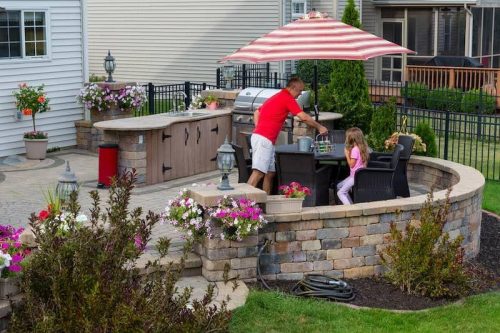
An outdoor kitchen in Florida works best when it’s part of a bigger plan.
When it’s isolated, it can feel disconnected. But when it ties into your outdoor living space, pool, patio, and seating. It becomes a true extension of your home.
Think of it this way:
The cooking area connects to the dining area.
Lighting ties everything together.
Flow supports how people actually move.
This is where many outdoor kitchen company designs fall short. They focus on the kitchen, not the full outdoor space.
When done right, it becomes a complete outdoor living experience, not just a place to cook in the fresh air.
A Smarter Way to Plan Your Outdoor Kitchen Budget in Florida
The smartest way to approach your outdoor kitchen cost is to slow down before you build.
Start with the layout. Before you look at stone colors or high-end grills, define how you actually cook and decide which features you’ll actually use. Then, build around those habits.
Focus on the structure first. By giving priority to the foundation and utility runs before picking out your finishes, you keep the project scope under control and avoid the expensive “mid-build” surprises that derail most budgets.
Working with an experienced outdoor kitchen company like Creative Outdoor Kitchen helps you plan everything upfront, layout, materials, and utility efficiency, so the build stays predictable.
A well-planned outdoor kitchen doesn’t just look better. It works better. It lasts longer. And it avoids the kind of cost spikes that catch most homeowners off guard.