When you picture building an outdoor kitchen, the first things that probably come to mind are the fun parts: choosing a grill, installing a pizza oven, maybe adding bar seating where friends can sit while you cook. But once construction begins, you quickly realize something: the success of the whole project often comes down to the outdoor kitchen layout.
In Florida, outdoor kitchens become part of everyday living. Weekend cookouts, poolside gatherings, and evening meals outside turn a simple patio into a full outdoor living area. When the layout is right, cooking flows naturally. Food prep happens smoothly, guests can move comfortably through the outdoor space, and the cooking area feels connected to the rest of your backyard.
But when the layout isn’t planned well, even a beautiful outdoor kitchen space can feel cramped or frustrating to use. A thoughtful outdoor kitchen layout helps you move easily between prep, cooking, and serving so the space truly works the way you expect.
Why Layout Matters More in Outdoor Kitchens
Designing an outdoor kitchen is different from designing an indoor kitchen. Inside the house, the walls define where cabinets, appliances, and work areas go. Outside, you’re working within an open backyard space where the layout must consider the patio, the main house, and the entire outdoor entertainment space.
That’s why the outdoor kitchen layout matters more than many homeowners realize. The cooking area needs to fit naturally into the whole outdoor living area, not feel like an isolated appliance zone dropped onto the patio.
In Florida, several factors make layout even more important:
Sun exposure can make a grill station uncomfortable if the cooking area faces direct afternoon sun.
Covered patios or lanais may trap smoke if ventilation isn’t considered.
Pools, fire pits, and seating areas affect how people move through the outdoor space.
A functional outdoor kitchen layout also makes food preparation easier. When the grill, prep area, and refrigerator are placed logically, cooking feels smooth rather than chaotic. With thoughtful placement of outdoor cabinets, countertops, and appliances, the kitchen becomes a natural extension of your home’s living space.
The Outdoor Cooking Workflow Most Designers Follow
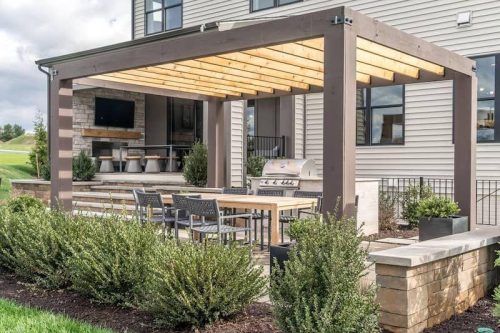
Professional designers rarely place appliances randomly. Instead, a well-planned outdoor kitchen layout follows a simple cooking workflow that keeps movement efficient and comfortable. The best designs make it easy for you to prepare food, cook meals, and serve guests without constantly walking back and forth across the outdoor kitchen area.
Most professionals start by thinking about how you actually cook. If you’ve ever tried to grill while people walk behind you or searched for a plate across the patio, you already understand why workflow matters.
The Work Triangle Still Matters
Many designers adapt the classic kitchen work triangle to the outdoors to optimize workflow. This concept links the three primary zones, Prep (Sink), Cooking (Grill), and Storage (Refrigerator), in a cohesive loop.
Efficiency: Keeping the distance between nodes between 4 and 9 feet minimizes unnecessary steps.
Safety: A defined triangle prevents guest foot traffic from cutting through the active cooking zone.
Functionality: Separates high-heat elements (the grill) from cold storage (the refrigerator) while keeping both accessible from the sink.
Prep → Cook → Serve Flow
Beyond the triangle, a functional layout follows a natural sequence that mirrors how you host. In Florida backyards, where gatherings are central to the lifestyle, this flow keeps you involved in the conversation rather than isolated in a corner.
Storage & Prep: Position the refrigerator and dry storage near the main counter for easy ingredient access.
The Cooking Zone: Place the grill or pizza oven central to the layout, with landing space on both sides for tools and platters.
Serving & Socializing: Situate the dining or bar area at the end of the sequence to keep guests clear of the heat while remaining part of the social hub.
When these elements are balanced, you can transition from marinating to grilling to serving without ever leaving the cockpit of your outdoor kitchen.
Separate Cooking Zones From Social Zones
Outdoor kitchens often double as an outdoor entertainment space, so the layout needs to keep cooking areas and social areas balanced. A grill placed in the middle of bar seating might look great in design inspiration photos, but in real life, it can cause traffic problems.
Instead, a thoughtful outdoor kitchen layout keeps the hot zone slightly separated from the seating or dining table so guests can relax without crowding the cook. The result feels more like a natural outdoor oasis than a crowded cooking station.
The Most Important Spacing Rules for Outdoor Kitchens
Once the workflow is planned, spacing becomes the next critical step. Even the best outdoor kitchen ideas can fall apart if appliances and counters are too close together. Proper spacing ensures safety, comfort, and efficient cooking.
Leave Enough Counter Space Around the Grill
A good rule of thumb in outdoor kitchen design is providing enough counter space around the grill for staging food.
Designers often recommend:
24 inches of uninterrupted counter space on one side of the grill
12 inches on the other side
This area becomes your prep area for raw ingredients and the resting spot for finished dishes. Without adequate prep space, you’ll constantly juggle plates, cooking utensils, and food preparation tasks.
Separate Hot and Cold Zones
Every outdoor kitchen layout includes both hot and cold areas. The grill, burners, or pizza oven create the hot zone, while refrigerators and sinks form the wet zone.
To keep the layout functional:
Separate hot and cold zones with 12–24 inches of counter space.
Avoid placing the refrigerator directly beside the grill.
Allow space for food prep between appliances.
These simple spacing rules make the outdoor kitchen feel much easier to use.
Allow Comfortable Walkways
Walkways are another often-overlooked part of the outdoor kitchen layout. Guests should be able to move through the patio without bumping into the cooking area.
Typical clearances include:
36 inches for walkways behind the cook
42–48 inches near bar seating or a kitchen island
These distances help keep the whole space comfortable, especially during busy gatherings.
Outdoor Kitchen Layouts That Work Best for Backyards
Different backyards require different layouts. The best outdoor kitchen design ideas balance available space, appliances, and how you plan to use the area. Below are some of the most common layouts you can consider.
Straight Run Layout
A straight-line outdoor kitchen layout works well for narrow patios or smaller outdoor spaces. It usually includes a grill, storage, and ample countertop space along a single wall.
This layout often works well when placed along a patio wall or near a pool house, leaving the rest of the patio open for a dining area or sitting area.
L-Shaped Layout
An L-shaped layout is one of the most popular options in Florida homes. It creates two connected countertops that form a natural work triangle.
Benefits include:
better separation between prep and cooking zones
room for bar seating
easy interaction with guests
The L-shaped design also works well when connecting the outdoor kitchen to a nearby dining area or outdoor bar.
U-Shaped Layout
A U-shaped layout surrounds the cook with countertops on three sides. This setup provides continuous counter space, storage, and an efficient cooking area.
Because it offers extensive surfaces and storage, this layout works well for larger backyards where homeowners want a modern outdoor kitchen with multiple appliances.
Double Galley Layout
In larger outdoor kitchen projects, designers sometimes use a double galley design. Two parallel counters or islands allow more than one cook to work comfortably at the same time.
This layout is common in large Florida homes with expansive patios designed for entertaining.
Florida Design Factors That Affect Outdoor Kitchen Layout
Florida backyards create unique design challenges that affect every outdoor kitchen layout. Heat, humidity, and sudden rainstorms all influence where appliances should be placed.
Sun direction plays a major role. If the grill sits directly in the afternoon sun, cooking can become uncomfortable quickly. Many homeowners position the cooking area under a covered patio or lanai for shade.
Ventilation also matters. Covered outdoor kitchens must allow smoke from the grill to rise and move away from seating areas. Without proper airflow, smoke can drift across the patio.
Finally, many Florida homes connect the outdoor kitchen space with pools, fire pits, or stone fireplaces. When the layout considers these other elements, the kitchen becomes part of a cohesive outdoor living area rather than a standalone cooking station.
How Professional Designers Plan Outdoor Kitchen Layouts
When planning an outdoor kitchen project, professional designers evaluate far more than appliance placement. They start by looking at the entire outdoor space and how it connects to the main house.
A design team typically considers:
How do people move between your house and your patio
Where the cooking area fits within the backyard
Placement of utilities like gas, water, and electricity
How your kitchen complements the home’s architecture
Designers also look at the balance between cooking zones, prep space, and seating. Their goal is to create a layout where the grill, sink, refrigerator, and prep counters work together naturally.
With careful planning, the outdoor kitchen design becomes a functional extension of the home rather than a collection of appliances placed randomly across the patio.
Design an Outdoor Kitchen That Works Every Time You Cook
A well-planned outdoor kitchen should make cooking easier, not more complicated. When the layout supports food prep, cooking, and serving, the space becomes somewhere you enjoy spending time rather than constantly adjusting around.
The right outdoor kitchen layout balances the grill, prep areas, and seating so everything flows naturally. With enough counter space, thoughtful appliance placement, and clear walkways, the kitchen becomes a comfortable gathering spot for your family and friends.
Frequently Asked Questions
The best layout depends on your backyard size and how you cook. Many homeowners choose L-shaped or U-shaped designs because they create efficient cooking zones and provide plenty of counter space for food preparation.
Most designers recommend at least 24 inches of uninterrupted counter space beside the grill and 12 inches on the other side. This provides enough room for food prep, plates, and cooking utensils while grilling.
A basic outdoor kitchen usually requires about 8–10 linear feet of counter space. More comfortable kitchens often range between 12 and 16 feet to allow room for appliances, prep space, and storage.
Common appliances include a gas grill, sink, refrigerator, and sometimes a pizza oven or outdoor bar. The final selection depends on how you plan to cook and entertain in your backyard.