Across the Sunshine State, more homeowners are turning patios and backyards into full outdoor kitchens. Maybe you’ve pictured grilling with friends, cooking under the lanai, or hosting weekend gatherings where everyone ends up around the grill. A well-designed Florida outdoor kitchen can make that lifestyle easy. But one detail quickly becomes confusing once planning begins: choosing the right outdoor kitchen countertop.
At first glance, many countertop material options seem similar. Yet Florida’s climate changes the conversation quickly. Constant sun exposure, sudden storms, high humidity, and coastal salt air all affect how surfaces age outdoors. Materials that look great in indoor kitchens can fade, crack, or discolor after years of direct sunlight.
If you enjoy backyard cooking and regular gatherings, the countertop you choose needs to handle hot pots, spills, and tough outdoor elements. Understanding the best outdoor kitchen countertop materials helps you create an outdoor space that stays durable, beautiful, and practical.
Why Outdoor Kitchen Countertop Materials Matter More in Florida Outdoor Kitchens
If you live in Florida, you already know how intense the weather can be on anything left outside. The same applies to your outdoor kitchen countertop. Florida presents unique challenges that many homeowners don’t initially consider when designing outdoor kitchens.
Your countertop will face:
Constant direct sunlight and powerful UV rays
Sudden rainstorms and heavy moisture
Persistent high humidity
Seasonal temperature changes
These outdoor elements place continuous stress on surfaces. Materials without strong weather resistance can fade, warp, or lose structural integrity after a few years of outdoor use.
Research on building materials exposed to long-term outdoor environments shows that UV radiation and moisture significantly impact the durability of many surfaces. Studies examining weather exposure on building materials explain how prolonged sunlight and humidity accelerate surface deterioration outdoors.
That’s why selecting the right countertop material matters so much for a Florida outdoor kitchen. When you choose wisely, your kitchen stays beautiful and low-maintenance despite Florida’s demanding climate.
The Best Outdoor Kitchen Countertop Materials in Florida
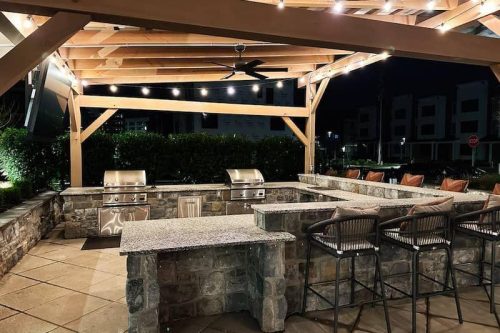
Not every surface holds up well outside. When planning a Florida outdoor kitchen, you need the best countertop materials that handle heat, humidity, and long hours of sun exposure.
Granite
For many homeowners, granite remains the most trusted choice for outdoor countertops.
Granite offers several advantages:
Incredibly durable natural stone
Handles heat well and stands up to high cooking temperatures
Beautiful, unique veining that adds natural beauty
Strong stain resistance when properly sealed
A granite durable outdoor counter easily handles hot pots, cooking prep, and everyday use. Many homeowners also love the timeless charm and classic look that granite brings to outdoor spaces.
The only downside is that granite can require sealing occasionally to protect the surface from stains and moisture. Fortunately, with proper sealing, maintenance stays simple.
Concrete
If you want something custom, concrete countertops give you the flexibility to create unique designs.
Concrete countertops provide:
Strong durability and structural strength
Custom shapes and textures
Wide color options
Concrete also performs well in high temperatures and offers solid weather-resistant performance.
However, like most stone surfaces, concrete countertops need proper sealing to maintain their appearance and resist stains.
A concrete outdoor kitchen countertop works especially well in contemporary outdoor kitchen design layouts.
Porcelain Slabs
Porcelain has quickly become one of the best materials for modern outdoor installations.
Benefits include:
Highly UV-resistant surfaces that help prevent discoloration
Scratch-resistant durability
A non-porous surface that resists stains
Extremely low maintenance
Porcelain also offers excellent heat-resistant properties and performs well in Florida’s humid climate.
If you want something sleek and modern, porcelain can be an excellent countertop choice.
Stainless Steel
For homeowners who love serious cooking, stainless steel countertops provide a professional kitchen feel.
Stainless steel surfaces are:
Highly resistant to heat
Easy to sanitize and maintain
Ideal for frequent cooking
Because of their strong heat resistance, stainless steel surfaces are common in commercial kitchens and increasingly popular for outdoor use.
If your outdoor kitchen is focused on grilling and cooking, an outdoor kitchen countertop made of stainless steel can support serious culinary adventures.
Outdoor Countertop Materials That Often Fail in Florida
Some materials simply struggle in Florida’s outdoor conditions. You might love the way a surface looks in an indoor showroom, but that doesn’t always mean it will survive years of direct sunlight, humidity, and storms.
Choosing the wrong outdoor kitchen countertop can lead to fading, cracking, or constant maintenance. Below are materials that often perform poorly outdoors.
Quartz
Quartz countertops are extremely popular indoors, but they often fail in outdoor installations.
Quartz contains resins that react poorly to UV rays. When exposed to direct sunlight, those resins can begin to break down.
Common issues include:
Yellowing surfaces
Warping
Loss of structural strength
Because of these risks, quartz is rarely considered a reliable option for outdoor kitchens in Florida.
Marble
Marble is beautiful and elegant, but it presents maintenance challenges outdoors.
Although marble offers impressive visual appeal, it is:
Highly porous
Easily stained
Sensitive to acidic foods
Even with occasional sealing, marble countertops can struggle in Florida’s high-humidity climate.
While marble works beautifully indoors, it rarely ranks among the best countertop materials for outdoor use.
Soapstone
Soapstone has a reputation for durability, but it still presents challenges for outdoor kitchen countertops.
Soapstone surfaces are:
Softer than granite
Prone to scratches
Limited in color selection
While soapstone is relatively resistant to heat and moisture, it often requires ongoing maintenance to keep its appearance consistent.
Tile Countertops
Tile surfaces were once common in outdoor kitchens, but many homeowners eventually replace them.
Why?
Grout lines trap moisture.
Mold and mildew can develop.
Cleaning becomes difficult.
In Florida’s humid climate, tile surfaces often struggle to maintain long-term durability.
For that reason, most modern outdoor kitchen countertop materials avoid grout-heavy designs.
How Florida Weather Affects Outdoor Kitchen Countertops
Florida weather can be tough on outdoor surfaces. If you’ve ever left patio furniture outside for a few years, you’ve probably seen what sun exposure, humidity, and rain can do.
Your exterior countertop surface faces those same conditions every day.
Common environmental factors include:
Intense heat from direct sun
Heavy rainstorms and moisture
Persistent high humidity
Frequent temperature changes
Dark countertops absorb more heat, which can make them uncomfortable to touch during summer afternoons. Meanwhile, porous materials can absorb water and develop stains if not properly sealed.
The combination of UV rays, moisture, and temperature swings makes weather-resistant materials essential.
When you choose surfaces designed for outdoor use, your countertop maintains its durability, appearance, and performance despite Florida’s demanding environment.
Design Considerations When Choosing Outdoor Kitchen Countertops
When selecting an outdoor cooking countertop, you’re not just picking a surface. You’re shaping how the entire kitchen functions.
Think about how you plan to use your outdoor spaces. Do you cook frequently outside? Host large gatherings? Prepare food next to the grill? Those habits influence your countertop choice.
Consider factors like:
Durability for heavy cooking activity
Ability to handle hot pots and high temperatures
Easy cleaning after gatherings
Strong stain resistance
Color also plays a role. Lighter surfaces reflect sunlight and stay cooler, while darker surfaces absorb heat.
You should also consider how the countertop complements your outdoor kitchen design. Materials like granite provide a classic look, while porcelain and stainless steel create more modern aesthetics.
Choosing materials that balance visual appeal, functionality, and low maintenance helps your outdoor kitchen stay enjoyable for years.
How Professional Designers Help Florida Homeowners Choose the Right Material
Designing a durable outdoor kitchen takes more than simply selecting attractive materials. Florida’s climate, layout, and sun direction all influence which outdoor kitchen countertop materials will perform best.
When you work with experienced designers, the team evaluates factors such as:
Sun exposure throughout the day
Drainage and moisture patterns
Structural support for heavy stone surfaces
Appliance placement within the outdoor kitchen design
Professional designers also help ensure professional installation, which plays a major role in long-term durability.
Many homeowners begin planning by exploring design inspiration and layout ideas. Resources like can help you understand how materials, appliances, and layout all come together.
With expert guidance, you can confidently choose surfaces built to withstand Florida’s climate.
Choosing the Right Countertop for Your Florida Outdoor Kitchen
Selecting the best outdoor kitchen countertop comes down to balancing durability, climate performance, and design style. Materials like granite, porcelain, concrete, and stainless steel consistently rank among the best materials for Florida environments.
When properly installed and properly sealed, these surfaces offer strong weather resistance, long-term durability, and attractive visual appeal.
If you’re considering a Florida outdoor kitchen, you can explore design options and completed projects by visiting .
With the right materials and thoughtful design, your outdoor kitchen can become the centerpiece of countless backyard gatherings.
Frequently Asked Questions
Granite and quartzite are widely considered the most durable outdoor countertop materials because they resist UV exposure, heat, and moisture common in Florida climates.
Quartz is not recommended for outdoor kitchens because prolonged sunlight exposure can cause discoloration and structural damage.
Most natural stone countertops require periodic sealing to protect against moisture, stains, and weather exposure.
Lighter-colored granite or porcelain slabs tend to stay cooler because they reflect sunlight rather than absorbing heat.
High-quality materials, such as granite or porcelain, can last for more than 10 years when properly installed and maintained.