Most homeowners underestimate how long it takes to build an outdoor kitchen in Florida. The actual labor may move quickly, but permits, appliance lead times, weather interruptions, and inspection schedules can stretch the timeline longer than expected.
It’s a domino effect that usually starts with a single missing gas valve. A backordered gas grill pushes countertop installation. Afternoon storms, the kind that show up at 2:00 PM like clockwork, will shut down concrete work for the day. Suddenly, a project that looked simple on paper keeps getting pushed back.
That is common in places like Orlando, Sarasota, and Naples, where outdoor living projects stay in demand almost year-round.
Timing also affects the outdoor kitchen cost. Waiting until spring often means busier contractor schedules, tighter appliance inventory, and longer permit queues. Fall and winter projects sometimes move more smoothly because crews are less overloaded and suppliers have better availability.
In this guide, you will learn what actually slows projects down, how long each construction phase takes, and what separates organized outdoor kitchen projects from the ones that drag on for months.
Quick Takeaways: The Florida Timeline
|
The Short Answer: Most Outdoor Kitchens in Florida Take 4 to 10 Weeks
Most Florida homeowners can expect an outdoor kitchen project to take between 4 and 10 weeks from active construction to final walkthrough. Simpler layouts move faster. Fully custom spaces with utilities, pergolas, refrigeration, and premium appliances usually take longer.
The confusion usually comes from how timelines get presented. Some contractors only talk about labor days. They leave out permits, inspections, appliance lead times, and material coordination.
That catches homeowners off guard.
For example, a basic island with a gas grill, moderate countertop space, and simple storage doors might move quickly if materials are already available. A luxury setup with custom granite, refrigeration, seating walls, lighting, and ventilation becomes a much larger coordination job.
Average Timeline by Project Type
Not every outdoor kitchen follows the same timeline. A simple grill station with basic storage moves much differently than a fully custom entertainment setup with refrigeration, lighting, seating walls, and utility upgrades. The more features added to the outdoor kitchen, the more coordination happens behind the scenes between trades, inspections, and material deliveries.
That is why two projects can look similar online but end up having completely different construction schedules in real life.
Project Type | Estimated Timeline |
Basic grill island | 3 to 5 weeks |
Mid-range custom kitchen | 6 to 8 weeks |
Luxury outdoor living setup | 8 to 12+ weeks |
What Homeowners Usually Forget About the Timeline
A few things quietly stretch the process:
HOA approvals
Permit review
Appliance lead times
Utility trenching
Weather interruptions
Countertop fabrication
Final inspections
One Sarasota homeowner thought the masonry work would be the slowest part. It turned out the real delay came from waiting on a specialty fridge and vent hood combination that arrived nearly six weeks late.
That happens more often now, especially with custom outdoor living projects.
What Actually Slows Down Outdoor Kitchen Projects in Florida?
Most delays happen before the cabinets or countertops even go in. Florida projects involve permits, weather, utilities, inspections, and scheduling coordination that homeowners rarely see until the construction starts slowing down.
An outdoor kitchen combines multiple trades into one project. Masonry, electrical, plumbing, gas, countertop fabrication, and appliance installation all need to hit the right timing. If one piece slips, everything behind it gets affected.
Permit and Inspection Delays
Permits alone can shift a timeline by days or even weeks, depending on the city.
Orlando and Naples often move differently from smaller municipalities. Some permit offices process quickly. Others stay backed up during peak remodeling season.
Florida’s shift toward digital permitting portals in 2026 has helped modernize submissions, but it has also created a different kind of bottleneck. Many counties now deal with overloaded review systems, online revision queues, and delayed approval notifications.
If your outdoor space includes a gas line, electrical upgrades, or a covered structure, inspections become even more involved.
Florida code requirements have also tightened over time. Outdoor outlets now require proper GFCI protection, and dedicated circuits are commonly required for refrigeration and cooking equipment.
If the plan is incomplete, revisions slow everything down quickly.
Florida Weather Interrupts More Projects Than People Expect
Florida weather constantly changes the schedule.
A week of heavy afternoon rain can delay concrete curing, paver installation, veneer work, or utility trenching. Summer storm patterns around Sarasota and Orlando create stop-and-start construction cycles that frustrate homeowners trying to stay on track.
Hurricane season creates another issue. Suppliers sometimes pause deliveries or redirect inventory during active storm periods.
That creates more waiting even when the contractor is ready to move.
Existing Backyard Conditions Create Hidden Work
Older backyard layouts often need prep work before crews can properly build an outdoor kitchen.
Some common problems include:
Uneven slabs
Drainage correction
Failing pavers
Limited utility access
Pool deck modifications
Soft or shifting ground
One Naples homeowner planned for a straightforward installation but discovered the existing slab pushed water toward the house. The crew had to rework part of the structure before framing could begin.
That added time, but it prevented much bigger drainage problems later.
Outdoor Kitchen Design Choices That Affect the Timeline
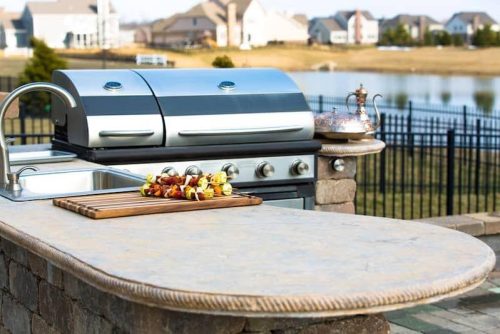
The design itself heavily affects how long the finished product takes. Some layouts are simple and efficient. Others involve several trades coordinating around custom details, utilities, and specialty materials.
More features usually mean more scheduling layers.
That does not mean you should avoid custom work. It just helps to understand where time gets added.
Simple Layouts Usually Move Faster
Straight-line layouts tend to move the quickest because they simplify utility routing, framing, and countertop fabrication.
A basic setup with a gas grill, storage doors, and moderate countertop space usually requires less heavy lifting than large entertainment layouts with bars and multiple cooking zones.
Smaller layouts also reduce material coordination. Less steel. Fewer specialty cuts. Fewer delays waiting on custom fabrication.
That helps crews maintain momentum.
Custom Outdoor Kitchen Design Requires More Coordination
A fully custom outdoor kitchen design creates a different level of scheduling.
Pergolas, pizza ovens, fire features, refrigeration, seating walls, and lighting systems all involve separate installation stages. One delay affects the next trade coming in behind it.
For example, if electrical rough-ins are incomplete, countertop templating gets delayed. That pushes fabrication back another week.
Custom stone veneer work also takes more labor than many homeowners expect. Detailed corners, specialty stones, and curved layouts require additional prep and finishing work.
Appliance Planning Early Prevents Major Delays
This is one area homeowners consistently underestimate.
Premium appliances often have long lead times, especially during spring and early summer. Some high-end grills and refrigeration packages take weeks or even months to arrive, depending on inventory.
The actual construction may finish before the kitchen is fully usable.
Don’t wait for the frame to be built to buy your grill. In today’s market, the appliance delivery date should help dictate the project start date, not the other way around.
That also gives your outdoor kitchen builder time to coordinate ventilation, utility placement, cabinet spacing, and framing dimensions correctly before installation begins.
Outdoor Kitchen Timeline Breakdown Step by Step
Most outdoor kitchen projects move in phases. Understanding those stages helps you know where delays happen and what to expect next instead of wondering why progress suddenly slows.
The labor itself often moves fast. Coordination is what determines whether the project stays efficient.
Phase 1: Planning and Design
Everything starts with measurements, budgeting, appliance selections, and material coordination.
This stage includes:
Layout planning
Appliance selections
HOA approvals
Utility mapping
Material scheduling
This is also where homeowners decide whether to build an outdoor kitchen with fully custom features or keep the layout simpler to save money and time.
Time-Saver Tip: Apply for HOA approvals and city permits simultaneously. Waiting to start one after the other can easily add multiple weeks.
Phase 2: Permits and Utility Preparation
This stage involves electrical, plumbing, gas, and slab preparation.
Crews may need to:
Cut into existing concrete.
Extend gas lines
Run new electricity
Adjust drainage
Modify pavers
If the outdoor kitchen sits near a pool, utility coordination becomes even more important.
Time-Saver Tip: Lock utility locations before framing starts. Mid-project changes create expensive delays later.
Phase 3: Framing and Structural Work
This is where the kitchen physically starts taking shape. Many Florida projects use steel studs and cement board instead of wood framing because they handle moisture better in outdoor conditions.
The frame gets assembled first, then crews prep surfaces for veneer, countertops, and utility installation.
Homeowners attempting a diy outdoor kitchen build often underestimate how technical this stage becomes. Proper fastening, moisture protection, screws, ventilation spacing, and utility planning all matter long-term.
Time-Saver Tip: Order specialty veneer and countertops before framing begins whenever possible.
Phase 4: Finishes and Appliance Installation
This is usually the most exciting stage because the space finally starts looking complete.
Crews install:
Veneer
Countertops
Drawers
Doors
Lighting
Refrigeration
Cooking equipment
The fresh look finally comes together here.
Time-Saver Tip: Schedule appliance delivery windows carefully. Idle crews waiting on missing parts quickly add labor costs.
Phase 5: Final Inspection and Punch List
The final stage includes inspections, safety checks, and small corrections. Sometimes it is minor. A vent adjustment. An accessory replacement. Alignment fixes. Then the kitchen is finally ready for weekends outside with family and friends.
Time-Saver Tip: Schedule final inspections early during busy spring and summer periods.
Why Some Outdoor Kitchen Builders Keep Projects on Schedule Better Than Others
The biggest difference usually comes down to coordination. Not speed.
A good outdoor kitchen builder manages the schedule like a system instead of leaving homeowners stuck chasing multiple subcontractors themselves. That matters more than people realize once construction starts.
A Single Point of Contact Reduces Delays
Homeowners often get trapped coordinating plumbers, electricians, masons, countertop fabricators, and inspectors themselves.
One missed phone call creates confusion fast.
When a builder uses ghost subcontractors, the homeowner is usually the one standing outside waiting for a plumber who never shows up.
A design-build company treats scheduling more like a closed loop. If the masonry crew finishes early, the countertop team is already lined up next.
That level of coordination keeps projects moving more smoothly.
One Orlando homeowner noticed the difference immediately after switching contractors mid-project. The first company left scheduling entirely up to subcontractors. The second builder managed everything internally, and progress finally stabilized.
Cheap Timeline Promises Usually Backfire
Fast promises sound good upfront. The reality is that unrealistic schedules often ignore permits, inspections, appliance lead times, or weather delays. Some contractors simply promise aggressive timelines to secure the job.
Then delays start stacking up later.
A rushed build an outdoor kitchen project can also create long-term issues with ventilation, utility placement, or finish quality.
Questions Worth Asking Before Signing
Before hiring a contractor, ask:
Who handles permits and inspections?
When are appliances ordered?
How are delays communicated?
Is the schedule documented in writing?
Who coordinates subcontractors?
The answers usually reveal how organized the project will feel once work begins.
The Best Time of Year to Build an Outdoor Kitchen in Florida
Fall and winter are often the easiest seasons to build an outdoor kitchen in Florida. Contractor schedules are usually more flexible, weather conditions are steadier, and suppliers may have better inventory availability.
Spring tends to create the opposite effect.
Many homeowners suddenly start planning outdoor upgrades once temperatures warm up again. Contractor schedules fill quickly across Orlando, Sarasota, and Naples during that stretch.
Why Fall and Winter Projects Often Move Faster
Cooler temperatures help crews work more efficiently, especially during masonry and concrete stages.
You may also notice:
Better contractor availability
Faster scheduling
More flexible install dates
Less weather disruption
Some homeowners also lock in material price stability before spring demand pushes supply tighter.
Why Spring and Summer Timelines Stretch Longer
Spring creates a surge of remodeling activity across Florida.
At the same time:
Afternoon storms increase
Permit offices get busier.
Appliance inventory tightens
Suppliers deal with backorders.
That combination slows timelines even for organized projects.
If you already know you want a new outdoor kitchen, starting earlier often gives you more control over scheduling instead of competing with peak-season demand.
Signs an Outdoor Kitchen Timeline Estimate Is Unrealistic
Very short timelines usually leave something important out. If a contractor says they can fully build an outdoor kitchen in two weeks without discussing permits, inspections, utilities, or appliance lead times, that should raise concern immediately.
A realistic estimate usually includes:
Permit review time
Material delivery schedules
Utility coordination
Weather flexibility
Inspection milestones
Another red flag is vague communication. If there is no written schedule or explanation of construction phases, the process often becomes chaotic once work begins.
Homeowners also run into problems when contractors promise completion before appliances are even ordered.
The goal is not to find the fastest promise. It is finding the most realistic one.
Is It Faster to Build an Outdoor Kitchen During a Pool Remodel?
Yes, combining both projects is often faster and more efficient.
When crews are already working on the backyard, utilities and hardscape work can happen simultaneously instead of reopening the same areas twice later.
That reduces duplicate work and reduces disruption around the property.
For example, if the pool remodel already includes new pavers, drainage correction, or electrical upgrades, adding the outdoor kitchen during this phase often saves significant time.
Shared trenching for gas and electricity is another major advantage.
Florida homeowners also benefit from streamlined paperwork. Combining projects can sometimes mean a single Notice of Commencement filing and a more organized inspection schedule with the city instead of managing two separate construction timelines.
One Sarasota homeowner combined a pool resurfacing project with an outdoor kitchen installation under one coordinated schedule. The overall timeline ended up shorter than splitting the work into separate phases months apart.
The key is planning both projects together early instead of treating the kitchen like an afterthought later.
Faster Outdoor Kitchen Projects Start With Better Planning
The fastest projects are usually the ones planned correctly from the beginning. Not the ones rushed halfway through.
Permits, appliance lead times, utility coordination, and weather affect how long it takes to build an outdoor kitchen in Florida. Good preparation helps prevent delays before construction even begins. That is where experience counts.
At Creative Outdoor Kitchen, projects are planned around real Florida conditions, realistic schedules, and long-term usability. A beautiful kitchen you cannot fully use because a backordered gas valve delayed installation is not a luxury. It is a headache most homeowners wish they had avoided earlier.
The goal is building an outdoor living space that works smoothly for your family, your schedule, and the way you actually use your backyard year-round.