You probably expect an outdoor kitchen to last for years. After all, it is a significant investment that adds value to your home, expands your living area, and creates a place where family and friends can gather. Yet many Florida homeowners are surprised when parts of their outdoor kitchen begin showing signs of wear after only a few years.
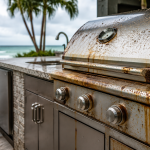
Cabinet doors start sticking. Metal surfaces develop rust spots. Countertops fade or crack. Drawers become difficult to open. What looked like a high-end installation suddenly feels old before its time.
The reality is that most outdoor kitchens do not fail because of poor aesthetics or obsolete design. They fail because the wrong outdoor kitchen materials were chosen for one of the harshest climates in the country.
Whether you live in Orlando, Naples, Fort Myers, or another Florida community, your outdoor living space must endure unrelenting sun, year-round humidity, heavy rain, and seasonal storms. If your kitchen is built with products designed for mild climates, deterioration often begins much sooner than expected.
Understanding which materials survive Florida weather and which ones struggle can help you protect your investment and avoid expensive repairs down the road.
Quick Summary
|
The Real Cost of an Outdoor Kitchen That Doesn’t Last
A failing outdoor kitchen costs more than money. It creates frustration every time you step outside.
You may notice rust forming around your grill. Cabinet doors begin swelling from moisture exposure. The surface of your countertops no longer looks as clean and polished as it once did. Small issues gradually become larger problems that require repairs, replacements, and ongoing maintenance.
Many homeowners assume these issues are simply part of owning an outdoor kitchen. In reality, premature deterioration is often avoidable.
The biggest difference between a kitchen that lasts five years and one that lasts fifteen or twenty years usually comes down to material choice. Selecting the wrong products may reduce the initial cost, but it often increases long-term ownership expenses. A kitchen built for Florida should be designed to handle constant exposure to the elements, not just occasional outdoor use.
Why Florida Creates Unique Challenges
Florida is different from most states. Even in Central Florida, where Orlando homeowners are farther from the coast than Naples or Fort Myers residents, moisture remains a constant concern. High humidity levels create an environment where water can penetrate surfaces, hardware, and structural components year-round.
Then there is the sun. Continuous UV exposure places enormous stress on finishes, coatings, countertops, and cabinetry. Add frequent rainstorms and extreme summer heat, and you have conditions that can quickly expose weaknesses in low-quality materials.
Many products marketed for outdoor use simply are not built to withstand Florida’s climate for the long haul.
Why Florida’s Climate Is So Hard on Outdoor Kitchen Materials
Florida’s climate accelerates deterioration because moisture, heat, and UV exposure are present almost every day of the year. Unlike regions that experience seasonal weather changes, Florida exposes your outdoor kitchen to environmental stress continuously.
Humidity Creates Constant Moisture Exposure
The biggest threat to many outdoor kitchens is moisture. Even when it is not raining, humidity can collect on surfaces and penetrate vulnerable materials. Products that are not truly water-resistant may slowly absorb moisture over time.
This becomes especially problematic with low-quality cabinets, poorly sealed joints, and materials containing engineered wood components. As moisture accumulates, surfaces may swell, warp, crack, or develop mold growth. Once deterioration starts, repairs become increasingly difficult.
Salt Air Speeds Up Corrosion
If your property is located near Naples, Fort Myers, or other coastal areas, salt exposure creates another level of risk. Salt particles settle on metal surfaces every day. Over time, corrosion develops even when materials at first appear unaffected.
Many homeowners are surprised to learn that not all stainless steel products perform equally well in coastal environments. Some grades are significantly more resistant to corrosion than others. Ignoring this detail can lead to expensive replacement costs later.
UV Rays Break Down Surfaces
The Florida sun does more than make outdoor entertaining enjoyable. It also breaks down finishes, weakens certain materials, and causes fading over time.
Products that look beautiful in a showroom may struggle after years of direct sunlight. Surfaces become brittle. Protective coatings deteriorate. Colors fade. Even kitchens built beneath a roof or pergola remain vulnerable because reflected sunlight continues to affect exposed areas.
Rain Creates Hidden Structural Damage
Water does not always damage what you can see. Rain often finds its way into joints, fastener locations, cabinet interiors, and framing systems. Once trapped, moisture may remain hidden for extended periods.
Without proper construction methods and weather-resistant materials, water infiltration gradually weakens structural components. This is one reason why many outdoor kitchens appear fine on the surface while significant deterioration develops behind the scenes.
7 Materials That Commonly Fail in Florida Outdoor Kitchens
Not every material marketed for outdoor use is suitable for Florida. Understanding where failures commonly occur helps you make smarter decisions before construction begins.
1. 304 Stainless Steel Near the Coast
Salt air does not care how expensive your appliances look. If you live near Naples, Fort Myers, or another coastal community, salt particles settle on exposed metal every single day.
Many outdoor kitchen packages include standard 304 stainless steel components because they help reduce upfront costs. The problem is that coastal Florida can be brutal on lower-grade metals. Over time, you may start noticing discoloration, surface staining, or corrosion around appliances, hardware, and storage components.
Homeowners often assume all stainless steel performs the same. It doesn’t. The grade of stainless steel can have a major impact on how well your outdoor kitchen holds up over the years.
2. Wood-Based Cabinet Systems
Wood naturally wants to absorb moisture. In Florida, where humidity can stay high for months at a time, that becomes a serious problem.
Even well-finished wood cabinets expand and contract as moisture levels change. Over time, swelling, cracking, warping, and deterioration become difficult to avoid. The process is often slow at first, but once moisture starts working its way into the material, the damage usually accelerates.
Unlike high-density polyethylene or powder-coated aluminum systems, wood requires ongoing maintenance and regular protection. Many failed cabinet installations share the same story: the materials simply were not designed for Florida’s climate.
3. Low-Quality Steel Framing
Most homeowners never see the frame once the kitchen is finished. Unfortunately, that is exactly where some of the biggest problems start.
If moisture reaches unprotected steel, corrosion can begin long before you notice obvious signs of damage. By the time rust appears on the surface, deterioration may already be occurring deeper within the structure.
The frame supports everything else in the outdoor kitchen. If it fails, everything attached to it becomes vulnerable.
4. Laminate Countertops
Laminate was never designed to spend years sitting in Florida’s heat, humidity, and direct sunlight. At first, everything may look fine. Then the edges start lifting. Seams begin separating. Moisture works its way underneath the surface. Before long, the countertop no longer looks or performs the way it should.
For homeowners planning a long-term investment, laminate often becomes one of the first materials that shows its age.
5. Standard Hardware and Fasteners
Sometimes the smallest parts create the biggest headaches. A rusted hinge, seized drawer slide, or corroded screw can make an otherwise beautiful outdoor kitchen feel worn out. These components face constant exposure to humidity and moisture, yet they are often overlooked during the planning process.
When hardware begins failing, functionality usually suffers before appearance does.
6. Low-Grade Stone Veneers
Not every stone product belongs outside in Florida. Some manufactured veneers absorb moisture more readily than homeowners realize. Over time, trapped water can contribute to staining, cracking, and separation from the structure behind it.
A stone finish may look impressive on installation day, but long-term performance depends heavily on the quality of the product and how it is installed.
7. Untreated Structural Components
Outdoor kitchens are only as strong as the structure underneath them. If framing materials, supports, or hidden structural components are vulnerable to moisture, deterioration can begin where you cannot see it. Years later, those hidden weaknesses often become expensive repairs.
Strong outdoor kitchens start with durable structural systems built specifically for Florida conditions.
How to Evaluate Whether an Outdoor Kitchen Is Built to Last
The best time to identify potential problems is before construction begins. A beautiful design does not guarantee long-term performance.
Ask About Material Specifications
One of the most important decisions you can make is understanding exactly which outdoor kitchen materials are being used throughout the project. Ask your contractor about:
Cabinet construction
Framing systems
Countertop materials
Hardware specifications
Appliance grades
Corrosion protection
The answers reveal far more than product brochures ever will.
Look Beyond Appearance
Many products look nearly identical when they are new. Two cabinet systems may appear the same in a showroom, yet perform dramatically differently after years of exposure to Florida weather. This is where understanding outdoor kitchen materials becomes critical. The products behind the finish often determine whether your investment lasts for decades or begins deteriorating after only a few years.
Review Warranty Coverage Carefully
Manufacturers often tell you exactly how much confidence they have in their products through their warranties. Look for clear coverage related to corrosion resistance, finish performance, structural integrity, and outdoor exposure.
Strong warranties typically indicate products that have been tested for long-term durability. The next step is understanding which materials consistently perform well in Florida and why experienced contractors choose them for long-lasting outdoor kitchens.
Materials That Actually Survive Florida’s Climate
The great news is that outdoor kitchens can thrive in Florida when built with the right products from the start. The goal is not simply choosing attractive finishes. The goal is to select outdoor kitchen materials that can handle moisture, UV exposure, heat, and daily use without constant maintenance.
Marine-Grade Stainless Steel Components
If your outdoor kitchen includes a grill, refrigeration, storage, sinks, or other appliances, stainless steel remains one of the best choices available. The key is selecting the appropriate grade.
Marine-grade stainless steel offers greater resistance to corrosion and is especially valuable in coastal communities like Naples and Fort Myers. Even homeowners in Orlando benefit from improved durability because Florida humidity never takes a break.
Beyond the grill itself, stainless steel should also be considered for:
Access doors
Storage drawers
Sink components
Hardware
Ventilation panels
These areas often experience the same environmental exposure as the primary cooking equipment.
Powder-Coated Aluminum Cabinet Systems
One of the biggest upgrades in modern outdoor kitchen construction is the shift away from traditional wood-based cabinetry. Powder-coated aluminum systems offer several advantages:
Resistant to moisture
Resistant to insects
Low maintenance
Strong structural performance
Designed for long-term outdoor use
Unlike wood, aluminum does not absorb water. It will not swell, warp, or deteriorate because of humidity. For many Florida homeowners, aluminum cabinet systems provide an excellent balance between durability, aesthetics, and long-term value.
High-Density Polyethylene Cabinetry
Another option gaining popularity is high-density polyethylene cabinetry. HDPE is a dense synthetic material specifically engineered for outdoor environments. Benefits include:
Completely waterproof construction
Excellent UV resistance
Low maintenance requirements
Resistance to mold and mildew
Long service life
Many homeowners appreciate HDPE because it delivers dependable performance without requiring frequent upkeep.
Concrete Block Construction
Many of the longest-lasting outdoor kitchens in Florida are built using concrete blocks as the structural foundation. Concrete performs exceptionally well in Florida because it is resistant to moisture, insects, and environmental deterioration.
When properly reinforced and finished, concrete block construction creates a durable framework capable of supporting countertops, appliances, and cabinetry for decades. This approach is particularly popular for custom installations where longevity is a primary goal.
Cement Board and Weather-Resistant Substrates
Behind many attractive outdoor kitchen finishes lies an often-overlooked component: the substrate. Using cement board instead of moisture-sensitive alternatives helps protect against water intrusion and structural damage.
Experienced contractors understand that what you cannot see is often just as important as what you can. A strong foundation behind tile, stone, or decorative finishes helps ensure long-term performance.
Granite Countertops
When discussing countertop options, granite remains one of the most trusted materials available. Granite offers:
Strong heat resistance
Excellent durability
Natural beauty
Proven outdoor performance
Many Florida homeowners choose granite because it has a long track record of success in outdoor environments. It handles direct sunlight well and performs reliably when properly sealed.
Porcelain Slabs
Porcelain slabs have become increasingly popular in high-end outdoor kitchen projects. These surfaces provide:
UV resistance
Moisture resistance
Excellent scratch resistance
Strong stain protection
Modern design flexibility
Many premium porcelain products also offer maximum stain resistance, making them appealing for families who frequently entertain outdoors.
Natural Stone Finishes
Natural stone remains a timeless option for outdoor kitchens. Whether incorporated into walls, decorative accents, or structural features, stone provides visual appeal and long-term durability.
When installed correctly, quality stone products can withstand years of exposure to Florida weather while maintaining their appearance. For homeowners seeking a custom, upscale aesthetic, natural stone continues to be one of the most effective design choices.
If you’re comparing countertop options in greater detail, our guide to the best outdoor kitchen countertop materials explores the strengths and limitations of today’s most popular surfaces.
How Long Should a Properly Built Outdoor Kitchen Last in Florida?
A properly constructed outdoor kitchen should not feel worn out after a few years. In many cases, high-quality installations can perform well for fifteen to twenty years or longer.
The lifespan depends largely on three factors:
Material selection
Installation quality
Ongoing maintenance
Many of the failures homeowners experience are directly tied to shortcuts made during construction and poor outdoor kitchen materials selection. A kitchen built with moisture-resistant framing, quality cabinetry, durable countertops, and corrosion-resistant hardware will generally outperform a kitchen built with lower-cost alternatives.
Why Paying More Upfront Often Saves Money
The upfront cost often gets the most attention, but it is only part of the long-term financial picture. However, replacement expenses add up quickly. Replacing cabinetry, countertops, hardware, or appliances after only a few years often costs far more than selecting better products during the initial build.
Many homeowners who regret their outdoor kitchen investment are not unhappy with the concept. They are unhappy because critical materials were chosen based on price instead of performance. The most successful projects focus on long-term value rather than short-term savings.
Choosing an Outdoor Kitchen Designed for Florida Conditions
One of the most important decisions you will make is choosing a builder who understands Florida’s unique environment. Not every contractor specializes in outdoor construction. Even fewer understand how local climate conditions affect long-term performance.
An outdoor kitchen designed for Arizona, Georgia, or North Carolina may require completely different material specifications than a kitchen designed for Florida.
Florida Experience Matters
Experienced Florida contractors understand:
Moisture management
Corrosion prevention
Material compatibility
Drainage planning
Appliance selection
Long-term durability
These details often determine whether your kitchen remains beautiful years from now. They also help prevent many of the issues discussed in our guide to common outdoor kitchen mistakes.
Focus on Performance, Not Just Appearance
A beautiful rendering does not guarantee a durable installation. Before signing anything, it is worth asking about:
Framing materials
Cabinet construction
Appliance specifications
Countertop options
Corrosion resistance
Warranty coverage
The answers often reveal whether a builder is prioritizing longevity or simply aesthetics.
Build an Outdoor Kitchen That Lasts
If you are investing in an outdoor kitchen, choosing the right outdoor kitchen materials is one of the most important decisions you can make.
Florida’s combination of humidity, heat, rain, UV exposure, and seasonal storms creates conditions that expose weaknesses quickly. Materials that perform well in other parts of the country do not always survive here.
Because of these environmental realities, the engineering and design team at Creative Outdoor Kitchen builds with Florida’s climate as the starting point rather than an afterthought. Structural systems, cabinetry, countertops, appliances, and finishes are selected based on how they perform after years of exposure to moisture, sunlight, and daily use.
Whether you are planning a project in Orlando, Naples, Fort Myers, or elsewhere in the state, our team designs custom outdoor kitchens in Florida that are engineered for long-term durability.
The best outdoor kitchens are not necessarily the most expensive. They are the ones built with materials that match the environment around them.
When the right products are selected from the beginning, your outdoor kitchen can continue looking great, functioning properly, and adding value to your home for many years to come.
Frequently Asked Questions
The most common causes are humidity, UV exposure, rain, salt air, and the use of materials that are not designed for Florida’s climate. Moisture-related damage and corrosion are often the biggest contributors.
Marine-grade stainless steel, powder-coated aluminum, HDPE cabinetry, concrete block construction, granite countertops, and porcelain surfaces are among the most durable options for Florida conditions.
304 stainless steel can perform well in some locations, but homes near the coast often benefit from marine-grade stainless steel because it offers greater resistance to corrosion from salt air.
Cabinets typically warp or swell when they absorb moisture. Wood-based cabinet systems are especially vulnerable in Florida’s humid environment if they are not properly protected.
A well-built outdoor kitchen using high-quality, weather-resistant materials can often last 15 to 20 years or more, depending on maintenance, exposure, and material quality.