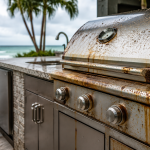
A great-looking outdoor kitchen does not guarantee long-term performance if the materials are not built for Florida weather. A kitchen near salty coastal air has different risks than a backyard setup in Orlando, Winter Garden, Lakeland, or Clermont.
That is where many homeowners get stuck.
You may see a photo online and think the same look will work in your backyard. Then Florida reminds you what it does best. Heat builds under the patio roof. Afternoon rain blows sideways. Hardware starts rusting. Cabinet doors swell. A countertop stains after one cookout. What looked perfect during planning becomes a maintenance headache.
The best outdoor kitchen materials are not always the most expensive ones. They are the materials that match your exposure, your layout, your cooking habits, and the amount of upkeep you are willing to handle.
If your home sits closer to Tampa Bay, Clearwater, St. Petersburg, Sarasota, or another coastal area, salt air and salt spray should shape your decisions. If you live inland in Central Florida, you may deal more with direct sunlight, high humidity, heavy summer rain, and long heat cycles. Both environments are tough. They are just tough in different ways.
Key Takeaways
|
Why Outdoor Kitchen Materials Matter More in Florida
Your material choices matter more in Florida because heat, humidity, rain, UV rays, and salt exposure can shorten the life of an outdoor kitchen.
An outdoor kitchen involves much more than a grill and a few storage cabinets. It is a built structure exposed to real weather. Even a covered patio does not fully protect everything. Wind can push rain under a roof. Humidity can sit inside cabinets. Sunlight can fade finishes. Moisture can find the smallest opening.
That means your outdoor kitchen materials play a pivotal role in how the space performs over time. Choosing the best outdoor kitchen materials from the beginning can help reduce maintenance issues and extend the life of the entire kitchen.
Florida’s Climate Is Tough on Outdoor Surfaces
Florida weather creates constant movement in materials. Surfaces expand and contract with temperature changes. Moisture encourages mold. Sun breaks down finishes. Rain tests seams, grout lines, and sealants.
Inland areas like Lake Nona, Apopka, and Winter Garden often deal with intense afternoon heat and strong sun across open patios. Coastal areas like Clearwater, St. Pete, and parts of South Florida add salt-heavy air to the mix.
You are not just choosing what looks good on day one. You are choosing what still looks good after three summers.
Coastal and Inland Homes Face Different Risks
Coastal homes need materials that resist corrosion, salt exposure, and wind-blown grit. Inland homes need materials that handle heat, UV rays, humidity, and sudden rain.
A homeowner near the Gulf may need marine-grade stainless steel, sealed stone, and corrosion-resistant hardware. A homeowner in Clermont may need shade planning, heat-resistant countertops, and surfaces that do not fade under long sun exposure.
The right answer depends on location, not trend.
What Outdoor Kitchen Components Are Most Vulnerable to Damage?
The most vulnerable parts of an outdoor kitchen are the countertops, cabinets, structural base, flooring, hardware, and utility connections. Each part faces a different kind of stress. One weak material can affect the entire build.
Countertops
Your outdoor countertop surfaces take heat, spills, rain, sunlight, and food prep. They also carry much of the visual weight of the space. The wrong countertop materials can stain, fade, crack, or require more maintenance than expected. Some materials look beautiful indoors but struggle outside.
Cabinets
Your outdoor kitchen cabinets need to resist moisture, heat, pests, and corrosion. Standard indoor cabinets are not built for this environment. Unlike wood cabinets used indoors, outdoor cabinets must handle humidity and weather movement without swelling, rotting, or falling apart.
Structural Base
The base holds the kitchen together. Many Florida outdoor kitchens use concrete blocks, masonry, metal framing, or weather-rated cabinet systems. The base should be durable, stable, and built for outdoor use. It should also allow safe access to gas lines, water lines, and service points.
Flooring and Surrounding Surface
The patio or deck around your kitchen matters because cooking spaces get wet, greasy, and busy. You need a safe, cleanable surface with enough grip underfoot. A good outdoor space should support the kitchen, the furniture, and the way people move through the area.
The Best Outdoor Kitchen Materials for Coastal Florida Homes
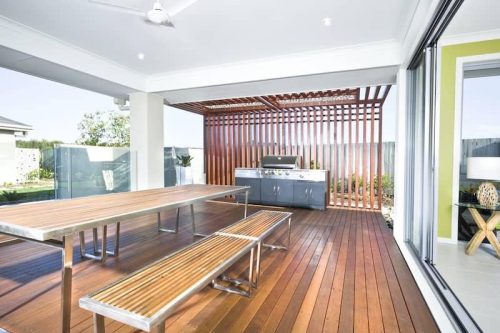
The best outdoor kitchen materials for coastal Florida homes are corrosion-resistant, low-porosity, UV-stable, and easy to maintain. Coastal homes face harsher conditions because salty air accelerates wear. Even if your home is not directly on the beach, salt can travel inland through the air and wind.
Marine-Grade Stainless Steel
Marine-grade stainless steel is one of the best choices for coastal hardware, appliances, and cabinet components because it resists corrosion better than standard metals.
For areas near Clearwater, St. Petersburg, Bradenton, or Naples, metal quality matters. Basic metal parts can rust faster when exposed to coastal moisture. Marine-grade options cost more upfront, but the added resistance can reduce long-term repairs.
Use it for:
Grill components
Cabinet hardware
Doors and drawers
Fasteners
Appliance finishes
High-Density Polyethylene Cabinets
High-density polyethylene cabinets are a strong option near the coast because they resist moisture, swelling, and rot.
This material does not absorb water like wood. It also handles humidity well, which makes it practical for homes exposed to rain and salt-heavy air. It is often chosen by homeowners who want low-maintenance cabinets with minimal upkeep. It may not offer the same traditional look as masonry or stone, but its resilience makes it a strong choice for harsh coastal settings.
Porcelain Slabs and Porcelain Tiles
Porcelain slabs and porcelain tiles work well in coastal settings because they are dense, heat-resistant, and highly resistant to staining.
Porcelain is less porous than many natural stones. That helps in humid areas and makes cleaning easier after cooking. It also resists fading from sunlight when properly selected for outdoor use. For countertops, large porcelain slabs can create a clean, modern look. For vertical accents or backsplash areas, porcelain tiles can add texture without demanding heavy maintenance.
Properly Sealed Granite
Granite remains a classic choice for Florida outdoor kitchens because it offers durability, heat resistance, and natural beauty.
For coastal areas, the key phrase is properly sealed. Granite is well-suited for outdoor kitchens, though sealing is often needed to help prevent stains and moisture-related issues. Lighter stones may show stains more quickly, while darker stones can hold heat in full sun. Granite is often a strong middle ground for homeowners who want a natural stone look without choosing a material that is too delicate.
Best Materials for Inland Florida Outdoor Kitchens
The best materials for inland Florida outdoor kitchens are heat-resistant, UV-stable, durable, and practical for heavy seasonal rain. Inland homes may not face as much salt exposure, but they still deal with intense sun and humidity. In areas like Orlando, Lake Nona, The Villages, and Winter Park, heat can be the main enemy.
Concrete and Masonry Bases
Concrete and masonry bases are strong choices for inland homes because they handle heat, rain, and daily use well. A properly built masonry structure can support appliances, countertops, and storage while creating a stable, long-term base. Concrete blocks are often used because they are durable and widely suited to Florida outdoor construction.
The downside is planning. Utility access, ventilation, appliance openings, and finish selection must be addressed early. Once the structure is built, changes become more difficult.
Granite Countertops
Granite can be a good bet for many inland homes because it handles heat and outdoor cooking demands well. If your kitchen sits under a pergola or roof, granite often performs even better because it receives less direct sun and rain. It still needs sealing, but it offers a strong mix of performance and aesthetic appeal.
Concrete Countertops
Concrete countertops can work well when they are properly designed, finished, and sealed. They offer custom shapes, colors, and textures. That makes them appealing if you want a one-of-a-kind outdoor kitchen design.
The tradeoff is maintenance. Concrete can stain or develop hairline cracks if poorly sealed or exposed to heavy weather without care. For homeowners who like a custom look and understand upkeep, concrete can be a strong option.
Aluminum Cabinet Systems
Aluminum cabinets can be a practical choice for inland homes because they resist moisture and pests better than natural wood. Powder-coated aluminum systems can offer a clean appearance with good durability. They are often lighter than masonry and may work well in remodels where weight and installation speed matter.
For coastal homes, aluminum quality and finish protection become even more important because salt exposure can affect lower-grade materials.
Comparing Outdoor Countertop Materials
The right countertop depends on exposure, maintenance expectations, and how you use the kitchen. A homeowner who grills twice a month may need something different from someone who cooks outside every weekend.
Material | Best For | Watch For |
Granite | Heat resistance, natural look, durability | Needs sealing |
Porcelain slabs | Low porosity, stain resistance, modern style | Higher installation skill |
Concrete | Custom shapes and finishes | Requires sealing and maintenance |
Marble | Natural beauty | Staining, etching, and higher maintenance |
Tile | Design flexibility | Grout maintenance |
Materials to Approach With Caution
Some materials look beautiful but need careful consideration outside.
Marble has natural beauty, but it can stain, etch, and show wear more easily in outdoor kitchens. Natural wood can look warm and inviting, but it needs frequent care and may struggle with moisture, insects, and Florida humidity. Certain composite materials may work in some outdoor settings, but not all are designed for high heat, UV exposure, or weather elements. Always confirm the material is rated for outdoor use.
Choosing Outdoor Kitchen Cabinets
The best outdoor kitchen cabinets are moisture-resistant, pest-resistant, and built for Florida weather. Cabinets do more than store tools and plates. They protect the layout and support the daily use of the kitchen.
Marine-Grade Stainless Steel Cabinets: Stainless steel cabinets offer a clean look and strong durability. In coastal areas, marine-grade options are often worth the added cost because of salt exposure. They pair well with modern homes and covered lanais. They also make sense when you want a sleek style with less concern about rot or swelling.
High-Density Polyethylene Cabinets: HDPE cabinets are a strong option for humid and coastal environments. They do not rot, splinter, or absorb water like wood. They also work well around pools, patios, and busy family areas because they handle spills and moisture better than many traditional options.
Masonry or Concrete Block Cabinets: Masonry cabinet bases are durable and highly customizable. They work well for homeowners who want a built-in look. These systems can be finished with stone veneer, stucco, tile, or decorative concrete finishes. They also feel permanent, which many homeowners like. The key is proper planning. Your layout, appliances, ventilation, and utility access should be set before construction starts.
Why Standard Wood Cabinets Fail Outdoors
Standard wood cabinets usually fail outdoors because they absorb moisture, swell, warp, or rot. Even under a covered patio, Florida humidity can be relentless. Afternoon storms can push water into areas that seem protected. Bugs and mold can also become problems.
If you love the look of wood, consider wood-look materials made for outdoor use instead of indoor-grade cabinetry.
Best Flooring Materials Around an Outdoor Kitchen
The best flooring around an outdoor kitchen should be slip-resistant, easy to clean, and durable enough for foot traffic, grease, rain, and furniture movement. Your flooring affects safety and comfort. It also affects how finished the whole space feels.
Decorative Concrete
Decorative concrete is a strong option because it can handle heavy use while offering design flexibility. It can be textured for grip, colored to match the home, and finished to complement stone, stucco, or modern cabinet systems. For Florida homeowners, it can be a practical way to upgrade an existing patio without starting from scratch.
Concrete Resurfacing
If your patio is worn, stained, or outdated, resurfacing may help create a better base for your outdoor kitchen. Concrete resurfacing can improve appearance, texture, and usability. It may also help tie the cooking area into the rest of your outdoor living space.
Pavers and Tile
Pavers can look beautiful, but joints may collect grease, weeds, and debris. Tile can be attractive, but it must be selected carefully for slip resistance and outdoor durability. For outdoor kitchens, the surface should be easy to clean after cooking and safe when wet.
How to Match Materials to Your Location and Lifestyle
The best outdoor kitchen materials depend on where your home is, how much exposure the kitchen gets, and how often you plan to use it. Your environment should guide your choices before style does.
If You Live Near the Coast: Look for materials that resist corrosion and remain easy to maintain over time.
Choose materials that can handle:
Salt air
Wind-blown sand
Humidity
Rain
Metal corrosion
Your best material mix may include marine-grade stainless steel, HDPE cabinets, porcelain slabs, sealed granite, and corrosion-resistant hardware.
If You Live Inland: Prioritize heat resistance, UV stability, and rain performance.
Choose materials that can handle:
Long sun exposure
High humidity
Afternoon storms
Heat buildup under covered patios
Lawn and pool traffic
Your best material mix may include masonry bases, granite, porcelain, sealed concrete, and durable decorative concrete flooring.
If You Entertain Often: Prioritize easy cleaning, layout flow, and durability.
Make sure you have enough space around the grill, prep area, seating, and outdoor furniture. A cramped design can make even premium materials feel frustrating.
Strategic placement also matters. Keep hot cooking zones away from tight walkways. Protect counters from full sun when possible. Use shade, roof coverage, or a pergola when it improves comfort and material performance.
Common Outdoor Kitchen Material Mistakes Florida Homeowners Make
Most outdoor kitchen material mistakes happen when appearance wins over performance. A beautiful kitchen can still become expensive to maintain if the wrong materials are used.
Choosing Materials Based Only on Looks: Style matters, but it cannot be the only factor. A material may look great in a showroom but perform poorly in a humid backyard. Before choosing, ask whether it is rated for outdoor use, UV exposure, heat, and moisture.
Ignoring Local Codes and Utilities: Outdoor kitchens often involve gas, water, electricity, drainage, and ventilation. Ignoring local codes can create safety issues and costly rework. Your design should account for gas lines, water lines, appliance clearances, and access panels from the start.
Underestimating Maintenance: Every material has some level of maintenance. Low maintenance does not mean no maintenance. Sealed stone still needs care. Stainless steel still needs cleaning. Concrete still needs protection. The goal is to choose a maintenance level you will actually keep up with.
Mixing Incompatible Materials: Some materials expand, contract, or drain differently. Mixing them without a plan can lead to cracking, staining, corrosion, or uneven wear. A good outdoor kitchen should work as one system, not a collection of unrelated parts.
Build Your Dream Outdoor Kitchen With Florida Conditions in Mind
You get better long-term results when your outdoor kitchen is designed around Florida’s climate before materials are selected.
The right plan starts with your location. Coastal homes need stronger corrosion resistance. Inland homes need materials that hold up under heat, sun, humidity, and rain. Covered spaces need different choices than fully exposed areas.
For many homeowners, the best outdoor kitchen materials combine durability, comfort, and appearance without creating unnecessary maintenance. Granite, porcelain, HDPE cabinets, marine-grade stainless steel, masonry bases, and decorative concrete surfaces can all be strong options when used in the right setting.
At Creative Outdoor Kitchen, you get guidance built around real Florida backyards, not one-size-fits-all product lists. Whether you are planning a compact grill station, a full outdoor living upgrade, or your dream outdoor kitchen, choosing the right materials from the start can help you create a space that looks good, works well, and holds up through Florida weather.